Compost and Recycling Guide
Store your food scrap in a container in your freezer, and take it out when it gets full. This prevents odors, stays cleaner, and reduces your trips to the Block Bin.

We recommend you seal all your food waste in paper bags or BPI Certified Compostable Bags (ASTM D6400) before making deposits. This keeps the bin cleaner and reduces flies.

Essentially all organic matter can be recycled. However, rotting meat, rancid oil, spoiled milk, and feces will cause the Block Bin to smell. Please do not deposit these materials.

Please lock the Block Bin and do not share the lock code with people not covered by your subscription.

Time your deposits to be closer to the pick up day when possible.
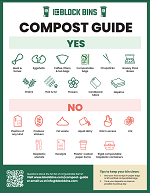
Here is a printable compost guide you can put on your fridge.
Common compostables and contaminants
Here are some common compostables and contaminants to watch out for:
| Compostable? | Name |
|---|---|
Yes | Avocados and pits |
Yes | BPI certified compostable bags & films |
Yes | Bones from cooking |
Yes | Bread |
Yes | Chopsticks |
Yes | Coffee filters & tea bags |
Yes | Coffee grounds |
Yes | Cooked food |
Yes | Cotton balls |
Yes | Cotton swabs with paper stick |
Yes | Dairy (solid) |
Yes | Egg shells |
Yes | Food scraps |
Yes | Meat scraps (small quantities only, deposit in paper bags close to pickup day) |
Yes | Natural wine corks |
Yes | Paper bags |
Yes | Paper napkins |
Yes | Paper towels (chemical-free) |
Yes | Pizza boxes |
Yes | Plant matter |
Yes | Shredded paper (must be plastic-free, no envelope windows) |
Yes | Soiled paper (non-glossy, plastic-free) |
Yes | Starch packing peanuts |
Yes | Toilet paper tubes |
Yes | Wood popsicle sticks |
| Compostable? | Name |
|---|---|
No | Cartons |
No | Dairy (liquid) |
No | Diapers |
No | Feces |
No | Lint |
No | Paper coffee cups |
No | Pet waste |
No | Plastic chopsticks |
No | Plastic cotton swabs |
No | Plastic-lined paper |
No | Plastics |
No | Produce stickers |
No | Receipts |
No | Rubber bands |
No | Twist ties |
No | Yard waste (note: use 311 instead) |